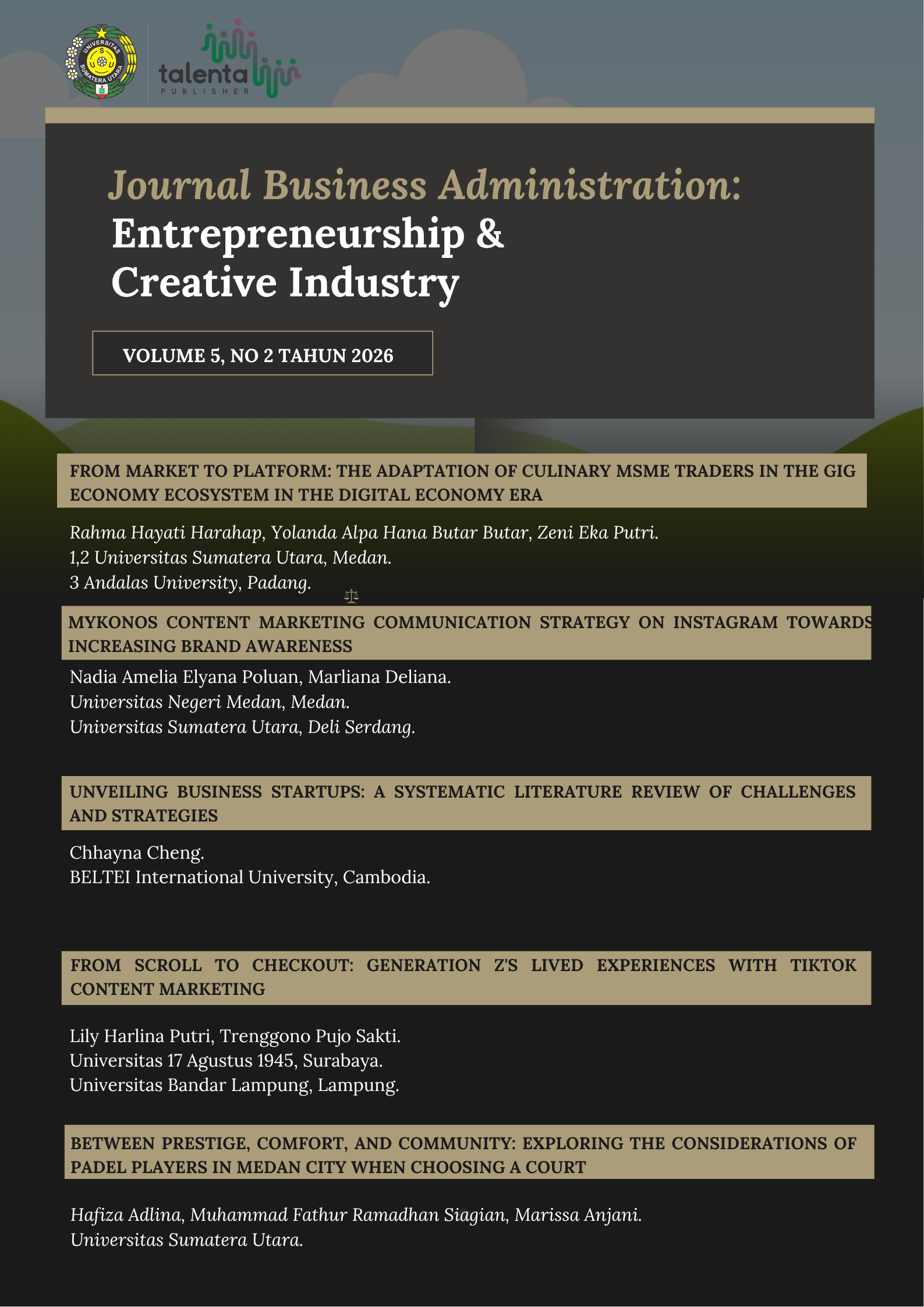
From Market to Platform
The Adaptation of Culinary MSME Traders in the Gig Economy Ecosystem in the Digital Economy Era
DOI:
https://doi.org/10.32734/jba.v5i2.24555Keywords:
Digital Economy, Culinary MSME Traders, Business Models, Gig EconomyAbstract
The rapid growth of the digital economy, accelerated by the COVID-19 pandemic, has fundamentally transformed business patterns for Culinary MSME Traders in Indonesia. This study explores how traditional traders adapt to digitalization, the economic impacts of digital platforms, transformation challenges, and the collaboration between MSMEs and the gig economy ecosystem. Using a qualitative approach, the research involved in-depth interviews with two Culinary MSME Traders who transitioned to digital platforms and collaborated with gig economy services. The findings indicate that prior to digital adoption, trading was limited by direct interactions, narrow consumer reach, and unstable income. Following the shift to digital media (WhatsApp, Facebook, and e-commerce), traders experienced increased efficiency, broader market expansion, and improved income stability. Furthermore, collaboration with gig economy couriers, such as ShopeeFood and GoFood, significantly streamlined distribution processes. However, despite these benefits, traders face persistent obstacles, including limited digital literacy, internet costs, and a decline in traditional social market interactions. In conclusion, while digital transformation poses certain challenges, it has overall enhanced business sustainability and merchant welfare, fostering a more.
Downloads
Downloads
Published
How to Cite
Issue
Section
License
Copyright (c) 2026 Journal Business Administration: Entrepreneurship and Creative Industry

This work is licensed under a Creative Commons Attribution-ShareAlike 4.0 International License.