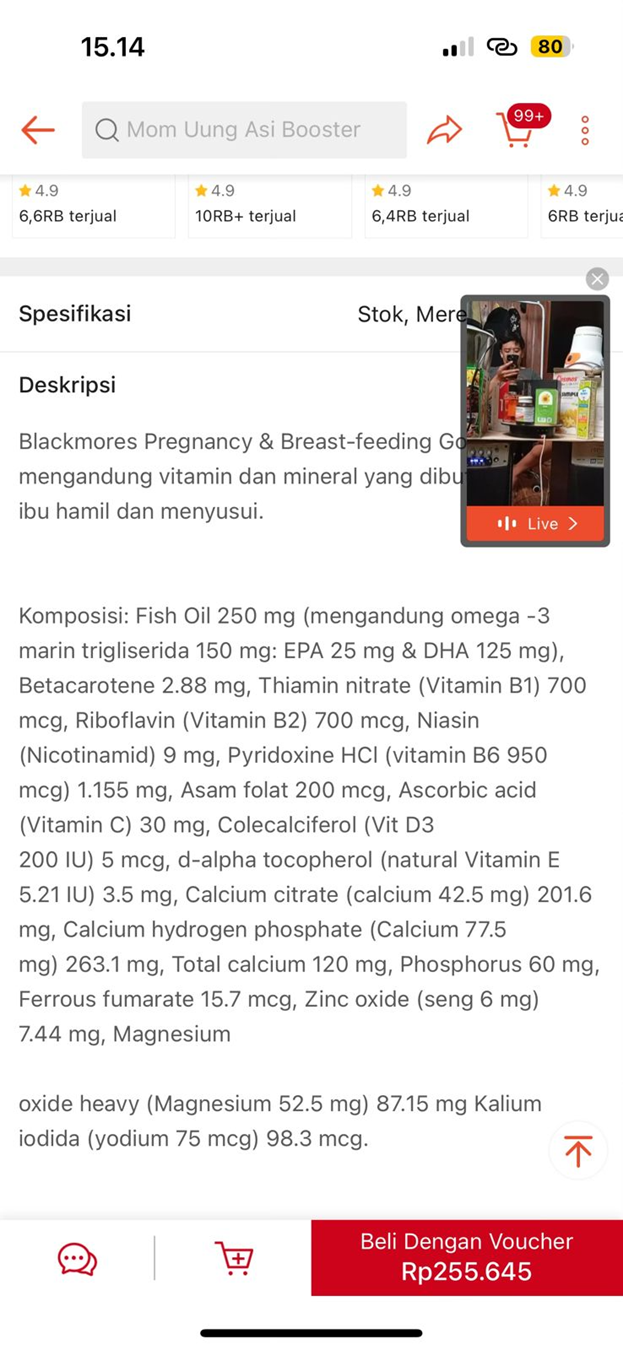
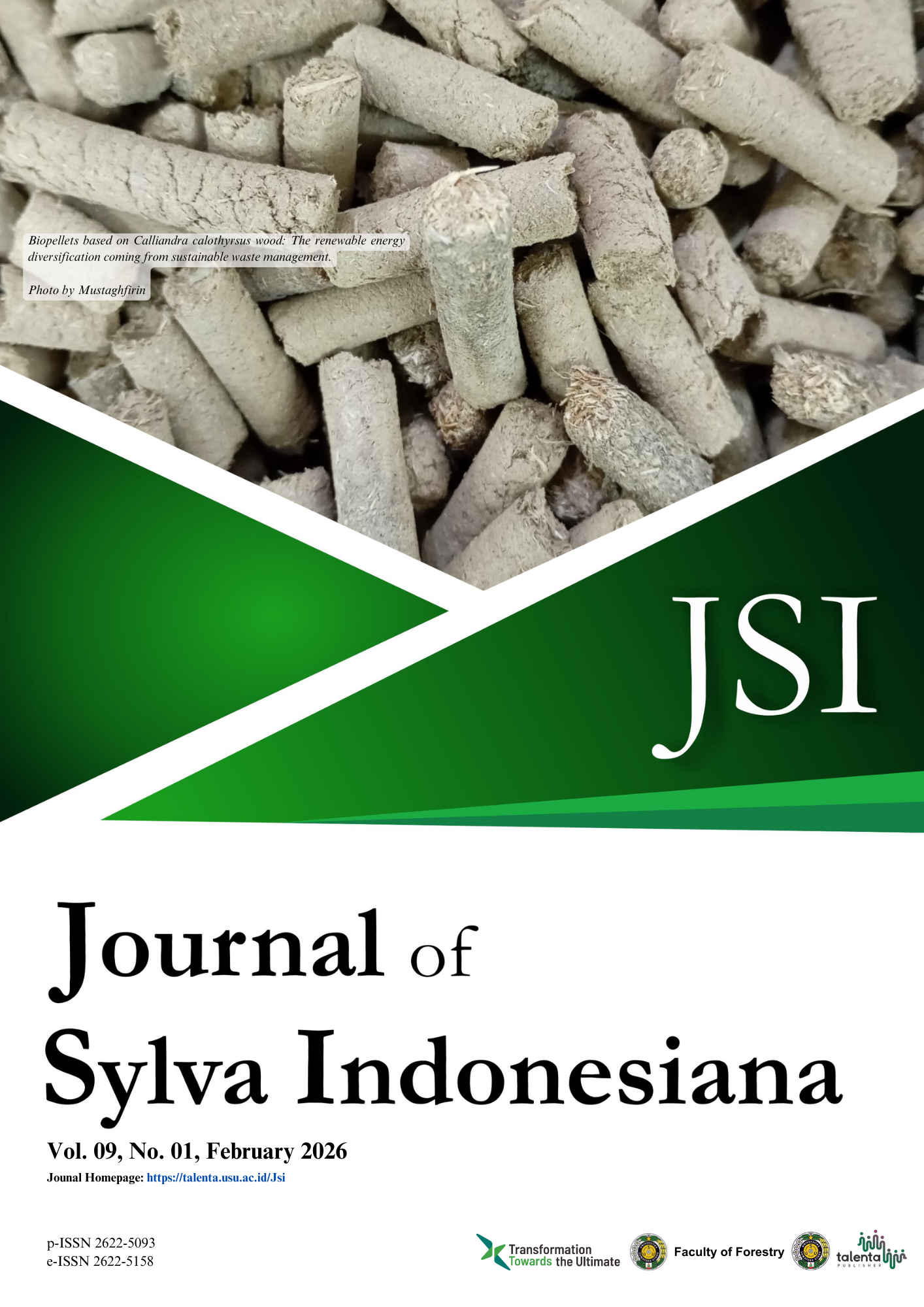
Synergistic Effects of Calliandra and Biomass Additives on the Fuel Quality of Biopellets for Sustainable Energy
DOI:
https://doi.org/10.32734/jsi.v9i01.21193Keywords:
Biomass, Calliandra calothyrsus, Eichhornia crassipes, Melaleuca cajuputi, Proximate Analysis, Renewable EnergyAbstract
The growing demand for renewable energy has driven the utilization of biomass as an environmentally friendly alternative energy source. This study aims to develop high-quality biopellets based on Calliandra calothyrsus wood by incorporating Eichhornia crassipes (water hyacinth) and Melaleuca cajuputi (cajuput leaf waste) to enhance combustion efficiency and reduce ash content. Five biomass formulations were evaluated: pure calliandra, pure water hyacinth, pure cajuput leaves, calliandra–water hyacinth (75:25), and calliandra–cajuput leaves (75:25). The produced biopellets were analyzed for their physical characteristics, calorific value, and proximate properties, including moisture content, volatile matter, ash content, and fixed carbon. Results showed that the calliandra–cajuput mixture yielded the best performance, with a density of 0.84 g/cm³, low ash content (2.65%), and a high calorific value (18.2 MJ/kg). The addition of water hyacinth reduced volatile matter but increased ash content. The biopellets from the calliandra–cajuput blend met the SNI 8675:2018 standard for both household and industrial use. This study demonstrates that the integration of locally available biomass waste can significantly improve biopellet quality while supporting sustainable waste management and renewable energy diversification.
Downloads
References
[1] BPS, “Bauran Energi Terbarukan,” Jakarta, May 2024. Accessed: Dec. 30, 2024. [Online]. Available: https://www.bps.go.id/id/statistics-table/2/MTgyNCMy/bauran-energi-terbarukan.html
[2] K. Darmawan, A. A. Setiawan, and N. Dewayanto, “Potential Comparison of The Utilization of Kaliandra (Calliandra calothyrsus) and Gamal (Gliricidia sepium) As Co-Firing to Meet Fuel Needs For PLTU Sudimoro Pacitan,” Jurnal Elektronika, Sains dan Sistem Energi, vol. 02, no. 02, pp. 1–09, Aug. 2023, doi: 10.51401/altron.v2i02.
[3] Daniela Thraen and Kay Schaubach, “Global Wood Pellet Industry and Trade Study 2017,” Nov. 2017. Accessed: May 12, 2025. [Online]. Available: http://task40.ieabioenergy.com/iea-publications/task-40-library/
[4] R. Permatasari, M. Atikayanti, and E. Sugitha Ginting, “Characteristic Tests of Bio-pellets Made of Calliandra Wood as a Renewable Alternative Fuel,” 2022. [Online]. Available: http://www.ijeepse.ejournal.unri.ac.id
[5] Abqoriyah, Ristianto Utomo, and Bambang Suwignyo, “Productivity Of Calliandra (Calliandra calothyrsus) As A Different Defolation Time,” Buletin Peternakan, vol. 39, no. 2, pp. 103–108, 2015.
[6] S. Wahyu Prasojo, N. Iskandar, and Muchammad, “Analisis Komposisi Material Berbahan Eceng Gondok Terhadap Karakteristik Biopelet,” Jurnal Teknik Mesin S-1, vol. 10, no. 4, pp. 559–566, 2022, Accessed: May 12, 2025. [Online]. Available: https://ejournal3.undip.ac.id/index/jtm
[7] E. A. Novinci Muharyani, “Potensi Penanganan Limbah Daun Kayu Putih Sisa Penyulingan di PMKP KRAI-Gundih,” Risalah Kebijakan Pertanian dan Lingkungan, vol. 9, no. 1, pp. 28–36, Apr. 2022, doi: 10.29244/jkebijakan.v9i1.28066.
[8] Diana Puspitasari, Iwan Gunawan, Coryanti, Prasodjo HN, and Gustan Pari, “Kajian Pengolahan Daun Kayu Putih-Limbah untuk Sumber Energi Alternatif,” Buletin Puslitbang, vol. 16, Oct. 2013.
[9] SNI, Pelet biomassa untuk energi. 2018. [Online]. Available: www.bsn.go.id
[10] I. Dewa Gede Putra Prabawa, “Effect of Biomass Moisture Content and Process Temperature on Biopellet Quality Derived from Rubber Seed Shell and Ater Bamboo (Gigantochloa atter),” Jurnal Riset Industri Hasil Hutan, vol. 10, no. 2, pp. 63–74, 2018.
[11] D. Indriani Widiputri, F. Ayuyasmin, and E. Herawati Legowo, “Biopellet Production from the Wastes of Palm Oil Plantation and Processing Plant Through Various Pretreatment Processes: A Review,” 2022.
[12] SNI, Pelet Kayu. 2014. [Online]. Available: www.bsn.go.id
[13] K. Li and X. Luo, “Research Progress on Catalytic Combustion of Volatile Organic Compounds in Industrial Waste Gas,” Catalysts, vol. 13, no. 2, Feb. 2023, doi: 10.3390/catal13020268.
[14] T. Cahyo Wahyudi, S. Dri Handono, L. Dwi Yuono, and Rohyani, “Pengaruh komposisi perekat dan diameter briket biopellet terhadap karakteristik dan temperatur pembakaran pada kompor gasifikasi,” Turbo, vol. 10, no. 2, 2021.
[15] S. Rahayu, S. Hilyana, E. Suryani, N. H. Sari, and M. Ali, “Analysis of Wood Pellet Quality from Calliandra Callothyrsus, Gliricida Sepium, and Sawdust as New and Renewable Energy,” in Proceedings International Conference on Science and Technology (ICST), 2020. Accessed: Apr. 15, 2025. [Online]. Available: tp://eprints.unram.ac.id/id/eprint/34185
[16] D. Dhuha Lamanda, D. Setyawati, F. Diba, and E. Roslinda, “Characteristic Biopellets Based On Composition Of Oilpalm Trunk And Laban Wood Charcoal With Different Adhesive Type As A New Renewable Energy,” Hutan Lestari, vol. 3, no. 2, pp. 313–321, 2015.
[17] Brayen Duke R, R. Yolanda Putri Windiarti, Erlinawati, and A. Zikri, “Pengaruh Variabel Proses dan Penambahan Cangkang Kelapa Sawit Terhadap Karakteristik Biopelet Serbuk Gergaji,” Distilasi, vol. 7, no. 1, pp. 41–51, Mar. 2022.
[18] M. G. Nugraha, H. Saptoadi, M. Hidayat, B. Andersson, and R. Andersson, “Particulate matter reduction in residual biomass combustion,” Energies (Basel), vol. 14, no. 11, Jun. 2021, doi: 10.3390/en14113341.
[19] S. Mustamu, D. Hermawan, and G. Pari, “Characteristic of Biopellet Made of Solid Waste of Cajuput and Pine Resin,” Jurnal Penelitian Hasil Hutan, vol. 36, no. 3, pp. 191–204, Dec. 2018, doi: 10.20886/jphh.2018.36.3.191-204.
[20] A. Demirbas, “Biomass resource facilities and biomass conversion processing for fuels and chemicals,” vol. 42, pp. 1357–1378, 2001, [Online]. Available: www.elsevier.com/locate/enconman
[21] M. I. Iskandar, A. Santoso, and N. Wiyantina, “Utilization of Lignin From Black Liquor as Composite Wood Adhesive,” Itekima, vol. 1, no. 1, pp. 2548–947, 2017.
[22] N. Fadhilla, A. Ekayuliana, and Nusyirwan, “Jurnal Mekanik Terapan Analisis Pengaruh Terbentuknya Slagging dan Fouling Terhadap Efisiensi Boiler pada Boiler Supercritical,” Mekanik Terapan, vol. 1, no. 1, pp. 9–18, 2020, doi: 10.32722/jmt.v1i1.3326.
[23] Y. Sulistio et al., “Effects of Torefaction with Counter-Flow Multi Baffle (COMB) Reactor and Electric Furnace on the Properties of Jabon (Anthocephalus cadamba) Pellets,” Jurnal Sylva Lestari ISSN, vol. 8, no. 1, pp. 65–76, 2020.
Downloads
Published
How to Cite
Issue
Section
License
Copyright (c) 2026 Mustaghfirin Mustaghfirin, Dede Hermawan, Deded Sarip Nawawi, Sukma Surya Kusumah, Muhammad Ferdiansyah, I Putu Raditya Bagus Surya Kelana, Alvian Saputra Pardede, Salman Rizqi Abdul Aziz, Cimmi Oki Putri Damanik

This work is licensed under a Creative Commons Attribution-ShareAlike 4.0 International License.