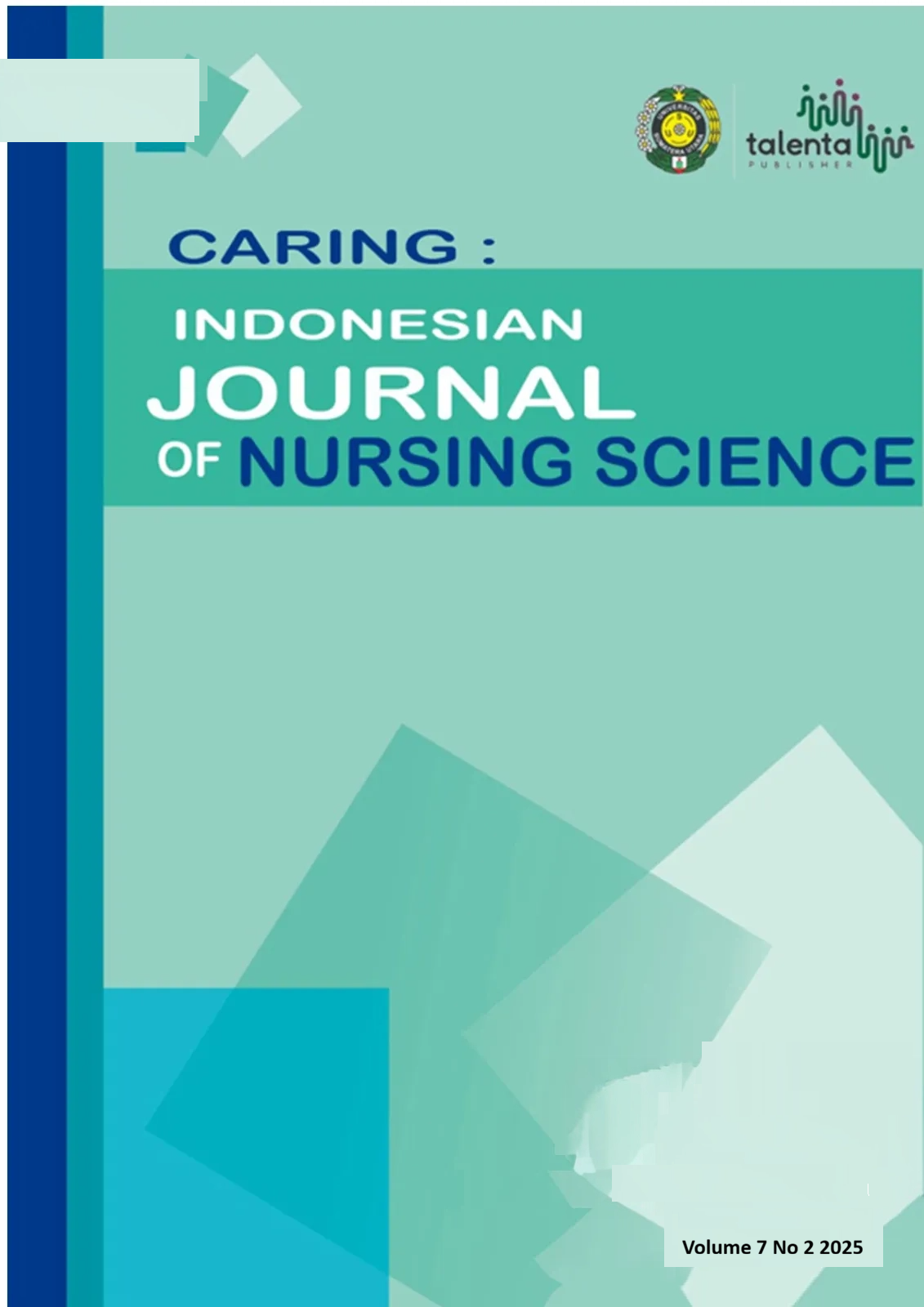
Family Experience in Supporting Diabetes Self-Management Practice: A Qualitative Study
DOI:
https://doi.org/10.32734/ijns.v7i2.23251Abstract
Family participation plays a vital role in the success of diabetes self-management (DSM). In Indonesia, family-centered care is culturally embedded, yet limited research has explored how families experience and interpret their roles in supporting self-management among patients with type 2 diabetes mellitus (T2DM). This study aimed to explore family experiences in supporting diabetes self-management practices among patients with T2DM in Medan, Indonesia. A descriptive phenomenological approach was employed. Twelve family members who cared for T2DM patients at Chairuddin Panusunan Lubis Hospital were recruited using purposive sampling. Data were collected through in-depth interviews and field notes from February to May 2025. Colaizzi’s seven-step analysis method guided data analysis to extract significant statements and formulate themes. Credibility was ensured through member checking, dependability via team discussion, and confirmability through audit trails. Five interrelated themes emerged: (1) controlling diet, (2) arranging physical training (3) administering medications, (4) emotional support, and (5) utilization of health care facilities. These themes reflected how families act as emotional motivators, behavioral supervisors, and coordinators of care to strengthen patients’ adherence and self-efficacy. Family involvement was not limited to instrumental assistance but extended to emotional reinforcement and facilitation of healthcare access. Family engagement forms the backbone of effective DSM, integrating physical, emotional, and social support. Strengthening family-based interventions is essential to enhance adherence, glycemic control, and quality of life among patients with T2DM.
Keyword: Family Experience, Diabetes Self-Management, Family Support, Qualitative Study, Indonesia
Downloads
Downloads
Published
How to Cite
Issue
Section
License
Copyright (c) 2025 Caring: Indonesian Journal of Nursing Science

This work is licensed under a Creative Commons Attribution-ShareAlike 4.0 International License.